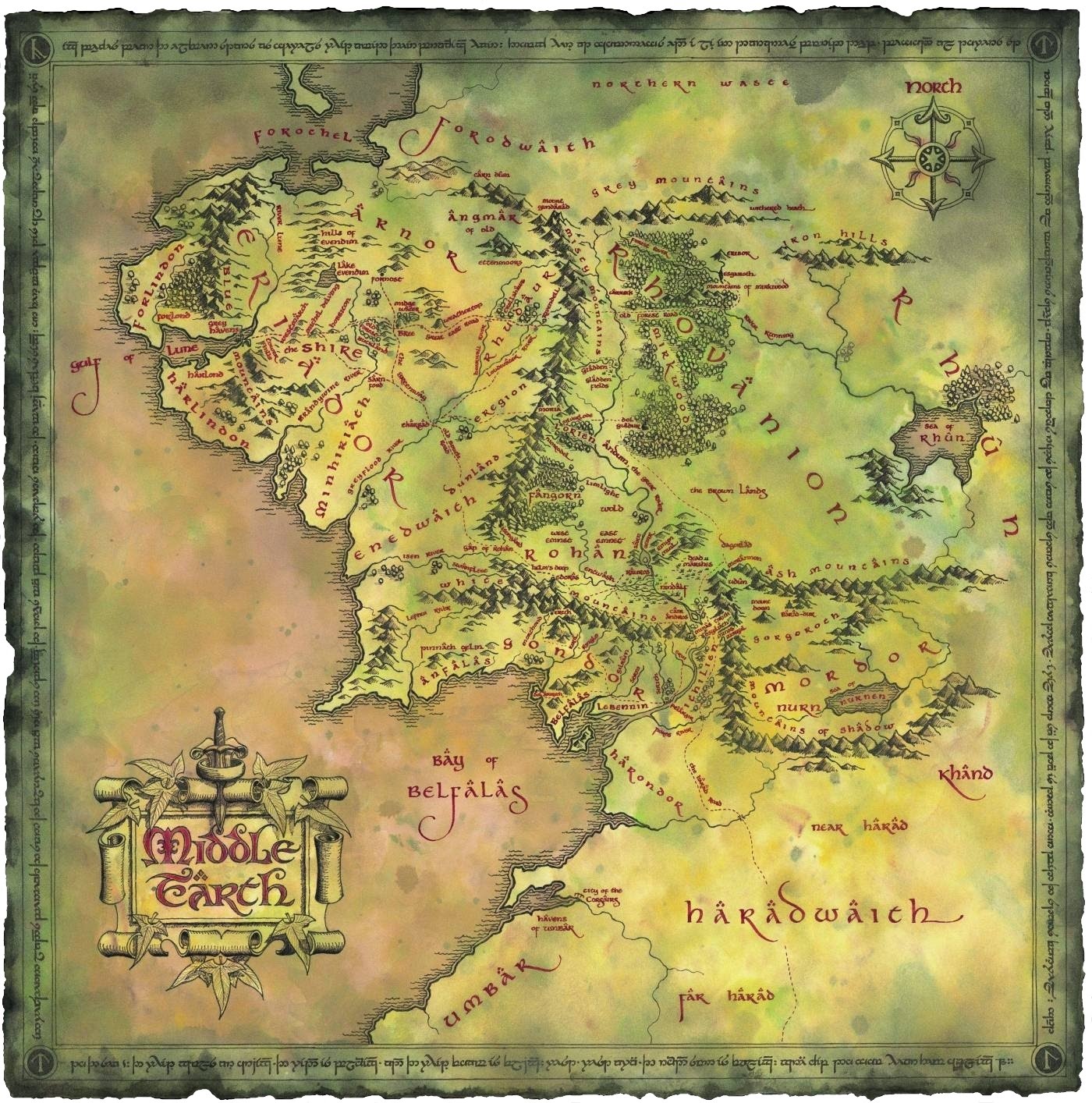
'Father-of-Man' (Sind. from Q. Atan, Atani) The Elves' name, given in friendship, for those among men who came across the Blue Mountains into Beleriand during the First Age, and fought alongside the Elves as allies in their long wars against Morgoth the Enemy. Like the Elves, the Edain were of Three Kinds, or Houses, led during the wars by Hurin, Turin, and Hador the Goldenhaired. Beren and his father Barahir were of the First House; the Second House (of Turin) had much to do with Dwarves; while the Third House (of Hador) was closest in friendship with the Eldar and became most renowned in battle. At the ending of the First Age, in return for their sacrifices in the wars, the Edain were granted land 'West-over-Sea'- the Isle of Elenna, most waterly of mortal lands. Using Earendil's Star as their beacon, the greater part of them then set out for their futire home. They named their new realm Numenor. The Elves then called this people Dun-edain, 'Men-of-the-West'. And the Numenoreans began to grow more kingly and proud, and more like the Eldar themselves, with whom they lived in friendship for the greater part of the Second Age; for they had also been rewarded with longer life than other men, though not with that immortality they always desired. Yet Numenor withered and and fell at last, and few survived: only the Faithful, led back to Middle-earth by Elendil the Tall. Like the Elves, they were a dwindling people.
One of the many names given by tradition to the period of Sauron the Great's first dominion over Middle-earth. Other names- the Black Years, the Dark Years- betray equally bitter memories of the latter part of the Second Age, when Numenor grew in power while men and elves of Middle-earth groaned under Sauron's tyranny or fought desperate wars for their very existence. Sauron established this early dominion by means of the Rings of Power. These were forged in Eregion, not by the Lord of Mordor but by the High-elves of Celebrimbor's House, seduced for this purpose in the days when Sauron's treacheries were not readily apparent. Under his tutelage, the Elven-smiths grew skillful at this craft and succeeded in forging, first lesser Rings with limited powers, then the Nine, the Seven, and the Three. The One Ring was forged by Sauron himself- and from the moment he first put it on and spoke the Ring-spell, his power in Middle-earth waxed, until many of the Free Peoples were defeated or enslaved. The Accursed Years had numbered nearly two thousand before the Last Alliance of Elves and Men took Sauron's Ring, cast down the Dark Tower and laid his realm in ruin, thus ending the Age. From The Tolkien Companion by J.E.A. Tyler